


 (305) 876-6001

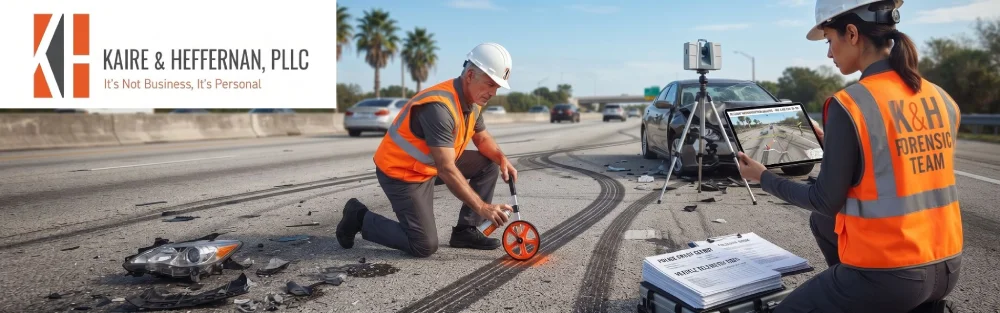
How Florida’s Comparative Negligence Laws Impact Your Miami Car Crash Settlement
Florida’s comparative negligence law reduces a plaintiff’s financial recovery in a personal injury lawsuit by their assigned percentage of fault, barring compensation if their contributory fault exceeds 50 percent under state statute.
Key Takeaways
- Modified Comparative Fault Standard: Under Florida Statutes Section 768.81, an injured claimant cannot recover damages if they are found more than 50% at fault for the motor vehicle collision.
- Proportional Recovery Reduction: If a plaintiff is assigned 30 percent liability for a crash along Biscayne Boulevard or I-95, their total court award or settlement is reduced by exactly 30 percent.
- Statute of Limitations Deadline: Personal injury actions must be initiated within two years of the accident date pursuant to Florida Statutes Section 95.11.
- Aggressive Defense Tactics: Insurance adjusters routinely exploit comparative fault rules to shift blame onto victims, demanding immediate evidence preservation by our Miami personal injury attorneys.
How Does Florida HB 837 Modify Fault Apportionment in Miami Car Accidents?
House Bill 837 transitioned Florida from a pure comparative fault state to a modified comparative negligence system, fundamentally altering how insurance companies evaluate settlement payouts. Prior to this legislative shift, an injured motorist could recover damages even if they bore 99 percent of the blame. Today, crossing the 50 percent fault threshold completely extinguishes a plaintiff’s right to recovery. According to safety analytics published by the National Highway Traffic Safety Administration (Nhtsa), insurance carriers weaponize this threshold to diminish legitimate claims arising from high-density traffic collisions across Miami, North Miami, Aventura, Fort Lauderdale, and Coral Gables.
Our Miami car accident lawyers counter aggressive insurer tactics by deploying independent accident reconstructionists, reviewing electronic control module (ECM) data, and securing municipal surveillance footage. Evaluating roadway safety conditions through data provided by the Federal Highway Administration (FHWA) allows our legal team to prove precise speed and establish that opposing drivers bear sole responsibility for the impact.
What Steps Do Our Trial Lawyers Take to Defeat False Accusations of Comparative Fault?
Countering insurance adjuster claims of shared driver liability requires immediate, aggressive forensic investigation and digital evidence extraction.
- Subpoenaing Electronic Logging and Telematics Data: Modern passenger vehicles and commercial trucks house Event Data Recorders (EDRs) that record pre-crash braking inputs, steering angles, and throttle positions seconds before impact.
- Securing Traffic and Commercial Camera Footage: High-density corridors monitored by the Florida Department of Transportation (FDOT) capture real-time traffic flow, though municipal data retention cycles require immediate preservation demand letters.
- Partnering with Accident Reconstruction Experts: Independent physicists model vehicle crash damage and skid mark geometry to disprove false claims that an injured plaintiff was speeding or distracted.
- Interviewing Independent Eyewitnesses: Securing sworn statements from neutral bystanders immediately following a crash prevents insurance adjusters from fabricating comparative fault narratives.
- Analyzing Police Report Inaccuracies: Law enforcement officers investigating chaotic multi-vehicle crashes often make erroneous preliminary assumptions that our legal team routinely correct through formal discovery.
How Do Traffic Safety Statistics and Injury Documentation Protect Against Fault Attribution?
Comprehensive medical documentation and objective physiological evidence prevent insurance adjusters from minimizing damages or exaggerating driver contribution. When a motor vehicle collision generates severe trauma, establishing an unbroken chain between the crash forces and physiological injury is vital. Research compiled by the Centers for Disease Control and Prevention (CDC) highlights that traumatic brain injuries and multi-level spinal trauma often manifest symptoms gradually, which defense adjusters exploit to claim pre-existing degeneration or delayed contributory negligence.
Our trial lawyers at Kaire & Heffernan coordinate directly with board-certified orthopedic surgeons, neurologists, and life care planners to validate permanent impairment thresholds under Florida Statutes Section 627.737. Reviewing public health indicators from the National Institutes of Health (NIH) regarding soft-tissue healing and surgical interventions strengthens our presentation of economic and non-economic damages before juries. Comprehensive oversight of these medical and legal intersections ensures our clients’ financial recoveries remain fully protected.
Frequently Asked Questions: Florida Comparative Negligence and Car Settlements
What is Florida’s modified comparative negligence rule for car accidents?
Florida law bars an injured plaintiff from recovering any financial compensation if a jury or insurance adjuster determines they were more than 50 percent at fault for the motor vehicle crash. If your fault is calculated at 50 percent or lower, your recovery is reduced by your exact percentage of liability.
How does the two-year statute of limitations impact my Miami car crash claim?
Under Florida Statutes Section 95.11, personal injury lawsuits stemming from motor vehicle negligence must be formally filed within two years of the accident date. Failing to file a complaint within this strict window permanently may forfeit your right to seek judicial relief.
Can I recover damages if I was partially speeding at the time of the collision?
Yes, you can still recover compensation as long as your assigned percentage of fault does not exceed 50 percent, though your settlement will be reduced proportionally. Insurance adjusters frequently assert excessive speed to shift blame, making expert telematics analysis essential.
What happens if multiple defendants share blame for a multi-vehicle crash?
Florida’s comparative fault framework allocates specific percentages of liability among all responsible parties, including third-party commercial entities and municipal agencies. Each defendant pays only their proportionate share of damages based on their assigned fault percentage.
Why do insurance adjusters attempt to assign comparative fault to victims?
Insurance adjusters deliberately assign fabricated percentages of fault to reduce their financial exposure or trigger the 50 percent bar to completely eliminate payout obligations. Directing all communications through our legal team shields you from predatory adjuster interrogation tactics.
How do attorneys prove the other driver was entirely at fault?
Trial lawyers utilize black-box data, cellphone records, intersection surveillance videos, and expert reconstruction testimony to establish clear primary negligence. This scientific evidence dismantles counterclaims alleging driver distraction or failure to yield.
Does the 14-day rule affect comparative negligence evaluations?
Seeking professional medical care within 14 days is mandatory to access Personal Injury Protection (PIP) benefits, and delaying treatment gives insurers leverage to argue you contributed to your own injuries. Prompt medical documentation prevents insurers from claiming your injuries worsened due to your own inaction.
What types of damages are reduced by comparative fault percentages?
Both economic damages (such as past medical bills, future surgical costs, and lost wages) and non-economic damages (such as pain and suffering) are reduced by your assigned percentage of fault. Securing maximum compensation requires aggressive defense against unwarranted fault allocations.
How do traffic cameras and EDR data alter settlement negotiations?
Objective digital telemetry and high-definition video provide irrefutable proof of right-of-way and speed, neutralizing subjective witness disputes and forcing insurers to offer fair settlements. Because commercial properties along major corridors overwrite video files rapidly, immediate preservation letters are required.
Why is hiring an experienced trial lawyer critical in comparative fault disputes?
Insurance companies employ aggressive defense counsel specifically trained to maximize plaintiff fault percentages and minimize payouts. Having seasoned litigators advocating for your rights ensures that baseless fault allegations are systematically dismantled.
About Kaire & Heffernan
Founded by seasoned trial attorneys Mark A. Kaire and David R. Heffernan, Kaire & Heffernan delivers aggressive, unyielding representation for injured victims throughout Miami, North Miami, Aventura, Fort Lauderdale, Coral Gables, and across Florida. Backed by more than $255 million in successful recoveries, our firm distinguishes itself through a strict direct-access standard—providing every client with personal cell phone numbers for round-the-clock availability and hands-on guidance from initial claim evaluation through trial.